
Your World Cup 2026 Betting Edge
 Available in US
Expert odds analysis, group-by-group breakdowns, and value picks — from kick-off to the final whistle in New Jersey.

Three countries, sixteen stadiums, forty-eight nations, and one hundred and four matches across thirty-nine days. The 2026 FIFA World Cup is not merely the largest football tournament ever staged — it represents a fundamental shift in how I approach betting on international football. Having covered major tournaments since 2018, I can confirm that this expanded format creates market inefficiencies that simply did not exist in the 32-team era.
For those of us based in Ireland, the tournament carries a particular sting. The Boys in Green came agonisingly close to qualification, finishing second in their UEFA group behind Portugal before losing on penalties to Czechia in the play-off semi-final. That 4-3 shootout defeat in extra time still burns. Yet being a neutral this summer opens genuine opportunities: no emotional attachment clouds judgment, no desperate loyalty inflates the odds on your own side. Instead, you can approach World Cup 2026 betting with clear eyes and a systematic edge.
This hub brings together everything I have learned from analysing three World Cup cycles. The structure covers all 12 groups with qualification odds, the leading outright markets for the tournament winner, detailed breakdowns of key betting types available at licensed operators, and a practical guide to kick-off times converted to Irish Standard Time. Whether you are backing Brazil at short prices or hunting value on dark horses like Morocco or the USA, the reference material here will serve you from the opening whistle at Estadio Azteca on 11 June through to the final at MetLife Stadium on 19 July.
The sections below are designed for quick navigation — jump to the groups, check the outright odds, or explore specific teams. Each area links to deeper analysis where relevant. Let me guide you through the biggest football betting event of our lifetimes.
World Cup 2026 Betting at a Glance
- The expanded 48-team format across USA, Mexico, and Canada runs from 11 June to 19 July 2026, with 104 matches creating unprecedented betting volume and market depth.
- Brazil and Argentina lead outright markets at approximately 4/1 and 9/2 respectively, while England and France offer value at 6/1 and 7/1 for punters seeking European winners.
- Irish bettors should note all kick-off times convert to IST (UTC+1), with most group matches starting between 18:00 and 02:00 Irish time.
- Scotland's return to the World Cup since 1998 — drawn in Group C alongside Brazil, Morocco, and Haiti — gives Irish neutrals a Celtic side to follow.
- The Gambling Regulatory Authority of Ireland (GRAI) now oversees all licensed operators, with new restrictions on promotions and credit card betting in force.
World Cup 2026 — Tournament Overview
I remember sitting in a pub in Dublin watching Qatar 2022 and thinking how tight the margins were — 32 teams, 64 matches, everything compressed into a month. Those days are gone. FIFA's expansion to 48 nations fundamentally alters the mathematics of tournament betting, and I have spent the past eighteen months preparing for what this means in practice.
The tournament spans three host nations across North America. The United States provides eleven venues, Mexico contributes three including the iconic Estadio Azteca, and Canada hosts matches at two stadiums in Toronto and Vancouver. This geographical spread introduces variables that rarely feature in European-based tournaments: altitude at Mexico City sits at 2,200 metres above sea level, humidity in Miami during June can exceed 80%, and the temperature differential between Seattle and Dallas may reach 15 degrees Celsius on any given match day. These conditions matter for in-play markets and goal totals in ways I will explore throughout this hub.
Tournament Format
The 48 teams are divided into 12 groups of four. The top two from each group qualify automatically for the Round of 32, joined by the eight best third-placed finishers. This pathway rewards consistency: a single win and a draw will likely secure progression, making group stage accumulator betting more viable than in previous formats.
From a structural standpoint, the group stage runs from 11 June through 27 June 2026, delivering three matches per team in a familiar rhythm. The knockout rounds then begin with the Round of 32 — a stage that did not exist in the old format — before progressing through the Round of 16, quarter-finals, semi-finals, and the final at MetLife Stadium in East Rutherford, New Jersey on 19 July.
The presence of 104 total matches across 39 days creates market depth that simply was not available at Qatar 2022 or Russia 2018. More matches mean more opportunities to identify value, more chances to apply systematic approaches, and more potential for bookmakers to misprice lower-profile fixtures. Group E featuring Germany, Côte d'Ivoire, Ecuador, and Curaçao will receive less attention than Group L with England, Croatia, Ghana, and Serbia — and that attention gap is where edge often hides.
The 2026 World Cup is the first to feature 48 nations and the first to be hosted by three countries simultaneously. Estadio Azteca becomes the first stadium to host matches at three different World Cups (1970, 1986, and 2026).

For a comprehensive breakdown of the betting implications of this format, including how the third-place qualification rule affects each-way markets, see the complete World Cup 2026 betting guide. The guide covers staking strategies, accumulator construction, and bankroll management tailored to a 39-day tournament cycle.
What strikes me most about this World Cup is the sheer volume of competitive fixtures. The old format often produced dead rubbers in the final group games; now, with only four teams per group and two automatic qualifiers plus the third-place pathway, nearly every match carries stakes. That intensity translates directly to more meaningful betting markets from first whistle to last.
All 12 Groups at a Glance
The draw ceremony in December threw up some fascinating combinations. Sitting in my office watching the balls come out of the pots, I immediately started running numbers on group winner probabilities — and a few groups stood out as genuinely competitive while others looked like processions. Here is where each of the 48 teams landed.
| Group | Team 1 | Team 2 | Team 3 | Team 4 |
|---|---|---|---|---|
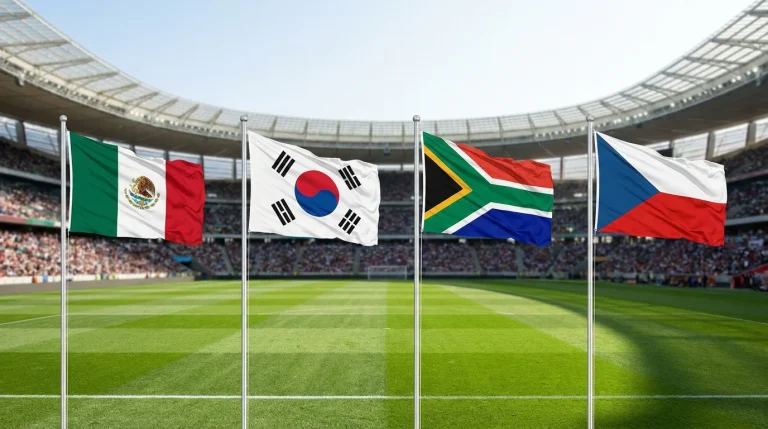
| A | Mexico | South Korea | South Africa | Czechia |
| B | Canada | Switzerland | Qatar | Bosnia-Herzegovina |
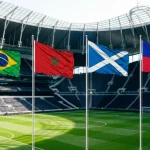
| C | Brazil | Morocco | Scotland | Haiti |
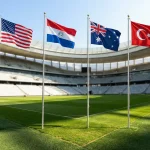
| D | USA | Paraguay | Australia | Turkey |
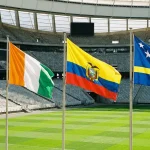
| E | Germany | Côte d'Ivoire | Ecuador | Curaçao |
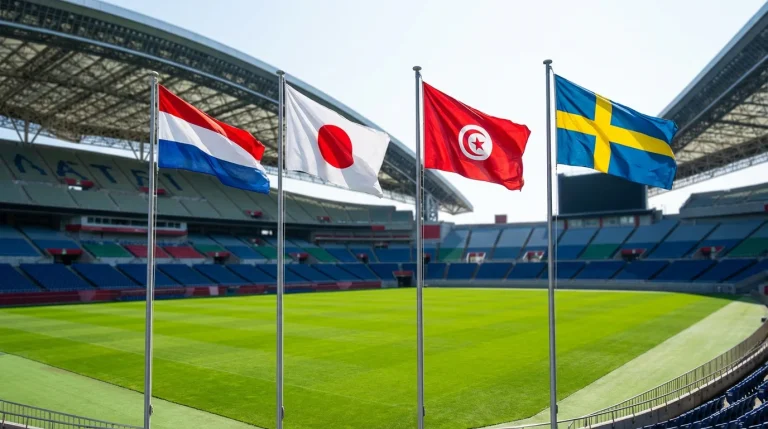
| F | Netherlands | Japan | Tunisia | Sweden |
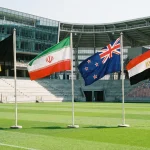
| G | Belgium | Iran | New Zealand | Egypt |
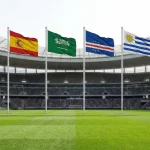
| H | Spain | Saudi Arabia | Cape Verde | Uruguay |
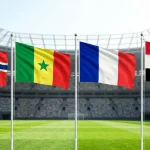
| I | Norway | Senegal | France | Iraq |
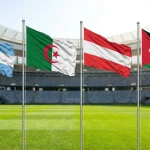
| J | Argentina | Algeria | Austria | Jordan |
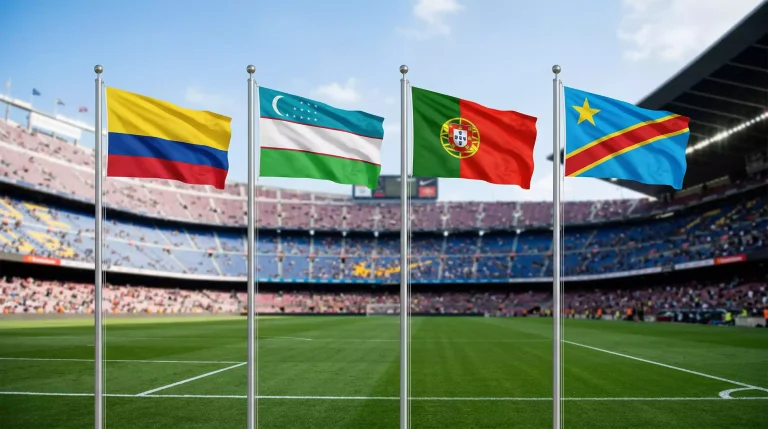
| K | Colombia | Uzbekistan | Portugal | DR Congo |
| L | England | Croatia | Ghana | Serbia |
Several groups demand closer attention from a betting perspective. Group C pairs Brazil with Morocco — the 2022 semi-finalists who knocked out Spain and Portugal — alongside Scotland making their first World Cup appearance since 1998 and tournament debutants Haiti. Brazil will dominate the group winner market, but the battle for second place creates genuine intrigue. Scottish qualification at odds of around 6/4 to progress represents one of the more interesting mid-tier propositions.
Group H presents what I would classify as this tournament's Group of Death. Spain and Uruguay are both genuine contenders for the latter stages, yet only two automatic qualification spots exist. Saudi Arabia proved at Qatar 2022 that they can produce results against elite opposition, and Cape Verde's qualification run has been remarkable. Backing Spain to win the group feels safe; backing them to face a tough Round of 32 opponent feels inevitable.
Group L carries particular weight for those of us watching from Ireland. England face Croatia — the team that ended their 2018 semi-final dreams — along with Ghana and Serbia. The Three Lions should progress comfortably, but Croatia's tournament pedigree (finalists in 2018, third place in 2022) means the group winner market is not a foregone conclusion.
Groups A, E, and J appear most predictable for group winner markets, with Mexico, Germany, and Argentina heavy favourites. Groups H, I, and L offer tighter margins and more value for qualification bets.
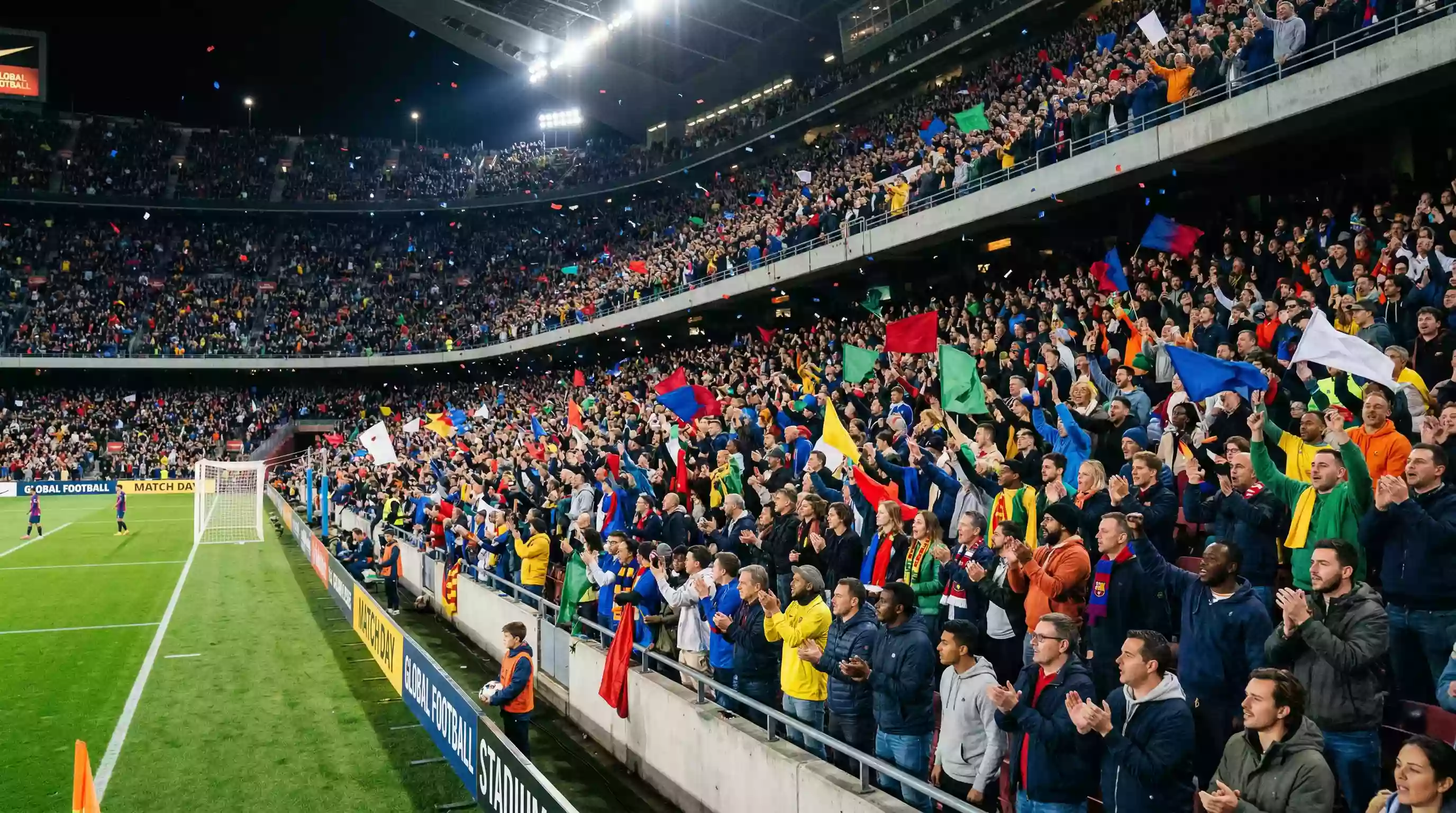
For Irish neutrals looking to invest emotionally as well as financially, Group C and Group L represent the obvious focal points. Scotland's Celtic connection and England's Premier League ties mean most pubs from Donegal to Cork will be tuned into those fixtures. The full breakdown of each group — including head-to-head records, qualification paths, and recommended markets — is available in the dedicated groups section.
The third-place pathway adds a layer of complexity to group stage analysis. Eight of the twelve third-placed teams will progress to the Round of 32, meaning a side that finishes behind Brazil and Morocco in Group C could still advance. This mathematically softens the elimination risk and changes how I approach accumulator construction for group stage outcomes.
One practical note: the groups are lettered A through L rather than the traditional A through H. This adjustment reflects the expanded field and affects how knockout bracket paths develop. A team winning Group A will face a third-place finisher in the Round of 32, while Group L winners face a runner-up. These structural details matter when projecting deep tournament runs and backing specific teams to reach particular stages.
Outright Winner Odds — Who Are the Favourites?
Back in February, I placed a small position on France at 8/1. The odds have since tightened to 7/1, which tells you how the market has moved as tournament anticipation builds. Understanding where value sits in the outright market requires separating genuine contenders from legacy pricing and media narrative.
Brazil currently lead most outright books at approximately 4/1, a price that reflects their five World Cup titles and the talent available to coach Dorival Júnior. Vinícius Jr., Rodrygo, and Endrick represent generational attacking quality, while the defensive spine has matured since the Qatar disappointment. The question with Brazil is always whether tournament pressure exposes psychological fragility — something I have witnessed at three consecutive World Cups now.
| Team | Fractional Odds | Decimal Odds |
|---|---|---|
| Brazil | 4/1 | 5.00 |
| Argentina | 9/2 | 5.50 |
| England | 6/1 | 7.00 |
| France | 7/1 | 8.00 |
| Germany | 8/1 | 9.00 |
| Spain | 10/1 | 11.00 |
| Netherlands | 14/1 | 15.00 |
| Portugal | 16/1 | 17.00 |
Argentina present an intriguing case as defending champions. At 9/2, they offer slightly more value than Brazil, and the Messi factor — likely his final World Cup at 38 years old — adds a narrative that bookmakers struggle to price accurately. The squad depth remains exceptional, with Álvarez, Mac Allister, and Fernández supporting a midfield that dominated in Qatar. My concern centres on motivation: having won the trophy, maintaining the hunger for a repeat requires psychological qualities that are difficult to measure.
6/1
England's current outright price represents what I consider fair value for a squad combining Premier League quality with genuine tournament experience. The Three Lions have reached at least the semi-finals at three of the last four major tournaments.
France at 7/1 remains my preferred position among the European contenders. Kylian Mbappé enters his peak years, the midfield generation of Tchouaméni and Camavinga has matured, and Didier Deschamps understands tournament football better than any active international manager. The 2022 final loss to Argentina on penalties still stings this group, and that motivation should not be underestimated.
Germany at 8/1 carry the benefit of momentum following a strong Euro 2024 campaign on home soil. Julian Nagelsmann has stabilised the squad and integrated younger talents effectively. Spain at 10/1 offer similar value, with their midfield diamond of Pedri, Gavi, and Rodri controlling possession against virtually any opponent. Both represent reasonable investments at double-figure prices.

The fuller breakdown of outright markets — including dark horse selections at 25/1 and beyond — appears in the complete odds reference. That section covers how implied probability calculations work, where the bookmaker margin sits on outright markets, and which price ranges historically produce winners.
Outright betting — a wager placed on the overall tournament winner, settled only when the final match concludes. These markets typically open months before kick-off and offer the longest odds available for favourites.
One pattern I have observed across three World Cup cycles: the winner almost always comes from the top six in pre-tournament outright pricing. Since 1990, only one champion (Spain in 2010 at 8/1) sat outside the top four of the betting. This historical compression suggests focusing your outright stake on the leading contenders rather than chasing longer shots with slim statistical foundation.
KickOff26 tool
Each-Way X-Ray
An each-way outright is two separate bets sold as one, and the second bet never shows you its price. Put in the headline odds and the place terms — this pulls the bet apart and prices both halves.
Total outlay €20.00
What your slip actually contains
Wins it
Reaches the final, loses it
Falls short
Are the place terms any good?
—
Or build it yourself
Most books price a standalone to reach the final market. If it beats the hidden place price above, back the two legs separately and you win more in every outcome that matters.
Enter a price to compare.
Prices shown are examples, not offers — always check the terms on your own slip, as place fractions and the number of places vary by operator and market. Estimates only; no outcome is guaranteed. 18+, GRAI-licensed operators only. If betting stops being entertainment, support is at problemgambling.ie or 1800 936 725.



Betting Markets Explained for the 2026 World Cup
A punter walked into a bookmaker's shop last summer asking for "something on the World Cup" and left with a 25-leg accumulator featuring both teams to score in every group match. He had no idea what he had purchased. Understanding the range of markets available — and which ones suit different risk appetites — separates recreational betting from systematic wagering.
The primary markets for World Cup 2026 fall into several categories. Outright betting covers tournament winner, top scorer (Golden Boot), and team-specific outcomes like "to reach the final" or "to exit in the group stage." These long-term positions require patience but often offer the best value early in the tournament cycle before public money concentrates on obvious selections.
Match betting operates on familiar territory: 1X2 (home, draw, away), Asian handicaps, and over/under goal lines. For a tournament played on neutral soil — despite the USA, Mexico, and Canada having "home" matches — the traditional home advantage factor diminishes significantly. I adjust my models accordingly, reducing the home edge from approximately 0.4 goals in domestic leagues to roughly 0.15 goals for World Cup fixtures.
Accumulator — a combined bet where multiple selections must all win for the wager to return. Also called a "parlay" in American terminology or simply an "acca" in Irish and British usage. The odds multiply together, creating larger potential returns but lower probability of success.
Player markets expand considerably during World Cups. Top scorer bets, anytime goalscorer on individual matches, assists, cards, and player shots all carry dedicated pricing. The Golden Boot market tends to favour strikers from teams expected to progress deep into the tournament — more matches mean more scoring opportunities. Harry Kane, Kylian Mbappé, and Erling Haaland currently lead that market.
Special and prop markets proliferate during major tournaments. These include tournament total goals, highest-scoring group, group winner combinations, correct score, and timing-based propositions like "first goal before 20 minutes." My experience suggests these specialty markets carry higher bookmaker margins than standard match betting, making them entertaining but mathematically challenging.
In-play betting transforms during World Cups. The volume of global viewership creates fast-moving markets with genuine liquidity, allowing positions to be opened and closed efficiently. I typically reserve 20-30% of my tournament bankroll specifically for in-play opportunities, particularly goal timing and next scorer markets where reaction speed matters less than reading match flow.
A detailed breakdown of each market type — including worked examples with real odds calculations — is available in the betting guide. That resource covers how each-way betting applies to outright World Cup markets, a particularly useful approach when backing mid-tier contenders to reach the final without winning it.
Each-way — a bet consisting of two equal parts: one on the selection to win, one on the selection to place (typically top 2 or top 4 depending on the market). If your pick reaches the final but loses, the place portion still pays out at reduced odds.
Teams to Watch — A Neutral Fan's Guide
When Ireland failed to qualify, I received messages from friends asking which team they should support. My answer depends entirely on what you want from this tournament: entertainment, value betting opportunities, or emotional investment. Each approach suggests different teams.
For sheer spectacle, Brazil remain unmatched. The Seleção's attacking combinations between Vinícius Jr., Rodrygo, and Raphinha create highlight-reel football regardless of results. Their Group C campaign opens against Morocco in what should be one of the tournament's standout matches, pitting South American flair against the African side that mesmerised at Qatar 2022. Brazil's matches will deliver entertainment even if the knockout stages bring familiar heartbreak.
Morocco deserve independent attention beyond their Brazil fixture. The Atlas Lions' 2022 run — eliminating Belgium, Spain, and Portugal before losing to France in the semi-finals — was not a fluke. Achraf Hakimi, Sofyan Amrabat, and Hakim Ziyech lead a squad that combines European club experience with genuine team chemistry. At approximately 33/1 for the outright, Morocco represent the dark horse value I find most compelling.
Morocco became the first African nation to reach a World Cup semi-final at Qatar 2022, winning four matches including three by clean sheet. They conceded only one goal in open play across the entire tournament.
The USA as hosts occupy an unusual position. American soccer has developed rapidly, with Christian Pulisic, Weston McKennie, and Tyler Adams now established at major European clubs. Home advantage across eleven venues creates a genuine atmosphere boost, and the cultural moment — the first World Cup on American soil since 1994 — adds pressure and opportunity in equal measure. At 20/1, backing the hosts to reach the quarter-finals offers reasonable odds on a motivated squad with favourable conditions.
Japan quietly deserve more attention than they receive. The Samurai Blue stunned Germany and Spain in the 2022 group stage, and their squad has only strengthened since. Drawn in Group F alongside the Netherlands, Tunisia, and Sweden, Japan face a competitive but navigable path to the knockout rounds. Their pressing intensity and technical quality make them dangerous opponents for any side, and 50/1 for the outright significantly underestimates their ceiling.

For complete profiles of all 48 teams — including squad analysis, tactical approaches, and market assessments — the teams directory provides individual pages for each nation. I recommend starting with the six favourites (Brazil, Argentina, England, France, Germany, Spain) before exploring the dark horse selections where value often concentrates.
Colombia warrant mention as a South American side flying under the radar. Their qualification campaign impressed, and the squad features attacking talent in Luis Díaz and Rafael Santos Borré alongside experienced heads. Drawn in Group K with Portugal, Uzbekistan, and DR Congo, Colombia should progress comfortably. At 25/1, they offer each-way appeal for punters willing to look beyond the obvious contenders.
The 48-team format means several quality sides will be available at inflated odds due to perceived group difficulty or lack of media coverage. Morocco at 33/1, Japan at 50/1, and Colombia at 25/1 represent my leading value selections among non-favourites.

















Scotland & England — The Irish Angle
The pub debates have already started. "Would you ever back England?" I was asked this in a bar in Galway two weeks ago, and the question captures perfectly the conflicted relationship Irish football fans have with our neighbours. The honest answer: it depends on the odds.
Scotland's presence at this World Cup carries emotional weight that transcends betting analysis. This is their first appearance since France 1998, ending a 28-year absence that spans an entire generation. For Irish supporters — Celtic cousins who share cultural ties, supporter traditions, and the experience of watching major tournaments from the outside — Scotland offer a natural alternative allegiance. Their Group C draw against Brazil, Morocco, and Haiti presents genuine drama, with the Haiti match on matchday two functioning as a near-must-win fixture.
Steve Clarke's squad combines Premier League experience (John McGinn, Andy Robertson, Scott McTominay) with Scottish Premiership consistency. At approximately 150/1 for the outright, backing Scotland to win the tournament makes no analytical sense. However, their qualification market tells a different story: odds of around 6/4 to progress from Group C reflect a realistic pathway. Beat Haiti, compete with Morocco, and the third-place route to the Round of 32 becomes mathematically favourable.
England present a more complicated proposition for Irish punters. The historical baggage needs no elaboration, yet the Premier League connection means most of us watch English football weekly and know these players intimately. Jude Bellingham, Harry Kane, Phil Foden, Bukayo Saka — their club performances are familiar; only the national shirt divides loyalty.
From a pure betting standpoint, England at 6/1 offer genuine value. The squad depth exceeds any previous English generation I have analysed, the tournament pedigree now includes semi-finals (2018), a final (2020), and a quarter-final (2022), and Group L should provide comfortable progression. Croatia pose the main group threat, but England's talent advantage is substantial.

For deeper analysis of Scotland's campaign — including fixture-by-fixture breakdowns and recommended markets — see the dedicated Scotland profile. That page covers the Celtic connection in detail and identifies specific value bets for Irish supporters wanting to follow the Tartan Army with financial as well as emotional investment.
Whether you back Scotland for sentimental reasons, England for analytical ones, or simply enjoy watching both with no money involved, these two squads will dominate Irish attention throughout the group stage. The fixtures are already circled in pubs across the country.
Key Dates & Kick-Off Times (IST)
My wife has already received the warning: June and July are tournament months. The 2026 World Cup schedule creates particular challenges for Irish viewers because the five-hour time difference with the US East Coast — and eight hours with the West Coast — pushes many kick-offs into late evening or early morning hours. Planning matters.
The tournament opens on Thursday, 11 June 2026 with Mexico facing South Africa at Estadio Azteca in Mexico City. That match kicks off at 23:00 IST, setting the tone for Mexican and Canadian fixtures which typically fall in the 23:00-02:00 window from an Irish perspective. US-based evening matches translate to more manageable times, generally between 20:00 and 01:00 IST.
| Stage | Dates | Typical IST Kick-Off |
|---|---|---|
| Group Stage | 11-27 June | 18:00, 21:00, 00:00, 02:00 |
| Round of 32 | 28 June - 2 July | 20:00, 23:00, 01:00 |
| Round of 16 | 3-6 July | 21:00, 00:00 |
| Quarter-finals | 9-10 July | 21:00, 00:00 |
| Semi-finals | 14-15 July | 01:00 |
| Final | 19 July | 20:00 |
Ireland operates on Irish Standard Time (IST) during summer, which equals UTC+1. When a match is scheduled for 3:00pm Eastern Time in the USA, it kicks off at 20:00 IST. West Coast evening matches starting at 6:00pm Pacific Time translate to 02:00 IST — fine for committed supporters, brutal for early morning workers.
The critical dates for Irish neutrals centre on Scotland and England fixtures. Scotland's Group C matches will likely fall in the prime evening window given the television appeal of their Brazil opener. England's Group L fixtures carry similar scheduling priority, meaning most of their games should kick off between 20:00 and 23:00 IST.
The final at MetLife Stadium is scheduled for 20:00 IST on Sunday, 19 July 2026 — arguably the most viewer-friendly timing for European audiences throughout the tournament. This reflects FIFA's recognition that global broadcasting revenue depends on European viewership despite the North American hosting.
IST Reminder
Ireland follows Irish Standard Time (UTC+1) from late March through late October. All times on this hub are converted to IST. Add one hour from UK times (BST also equals UTC+1 during summer) if cross-referencing British sources.
For the complete fixture list with confirmed kick-off times, venues, and television broadcast details, the full schedule converts every match to Irish time. I recommend adding the key matches to your calendar now — the group stage moves fast, and missing a Scotland or England fixture would be unforgivable.




Responsible Gambling & Irish Regulation
I have watched friends lose control during major tournaments. The daily fixture list, the constant availability of in-play markets, the perceived "edge" from watching every match — it creates conditions where recreational betting can slide into problematic behaviour. The 39-day duration of World Cup 2026 amplifies these risks, and I would be negligent not to address them directly.
Ireland's gambling landscape has transformed since the Gambling Regulation Act 2024 came into force. The Gambling Regulatory Authority of Ireland (GRAI) now oversees all licensed operators, replacing the fragmented oversight of previous decades. From a practical standpoint, this means several changes that Irish punters should understand before the tournament begins.
Credit card betting is now prohibited with GRAI-licensed operators. If you previously used credit to fund betting accounts, that pathway has closed. Operators must now offer deposit limits, reality checks, and self-exclusion tools as standard features. The advertising restrictions — including a broadcast ban between 5:30 and 21:00 — reduce promotional pressure, though online marketing remains prevalent.
The 2026 World Cup will be the first major football tournament under the new regulatory framework. GRAI has signalled increased monitoring of operator behaviour during high-profile events, and complaints carry more weight than under the previous system. If an operator behaves problematically, reporting mechanisms now exist through GRAI's official channels.
My personal approach to tournament betting involves strict bankroll separation. Before the tournament begins, I allocate a specific amount for World Cup wagering — an amount I can afford to lose entirely without financial consequence. That bankroll then subdivides: 60% for pre-match markets, 30% for in-play opportunities, and 10% reserve for knockout stage adjustments. This structure prevents the common trap of chasing losses during an extended tournament.
The GRAI website provides resources for those concerned about their gambling behaviour or that of someone they know. Problem gambling support services operate confidentially and without judgment. Enjoying the World Cup does not require betting on it, and stepping away when it stops being entertaining is always the right decision. No match, no market, no potential return is worth compromising your wellbeing or financial stability.
Frequently Asked Questions
When does the 2026 World Cup start and finish?
The tournament runs from 11 June to 19 July 2026, spanning 39 days. The opening match features Mexico versus South Africa at Estadio Azteca in Mexico City, kicking off at 23:00 IST. The final takes place at MetLife Stadium in East Rutherford, New Jersey, with a 20:00 IST kick-off on Sunday 19 July. The group stage concludes on 27 June, after which knockout rounds progress through the Round of 32, Round of 16, quarter-finals, and semi-finals.
Did Ireland qualify for the 2026 World Cup?
No, the Republic of Ireland did not qualify. Ireland finished second in their UEFA qualifying group behind Portugal, then entered the play-off pathway. In the Path D semi-final, Ireland drew 2-2 with Czechia after extra time but lost the penalty shootout 4-3. This eliminated Ireland from contention, leaving Irish supporters to follow the tournament as neutrals.
How many teams compete in the 2026 World Cup?
The 2026 tournament features 48 teams, an expansion from the 32-team format used since 1998. These 48 nations are divided into 12 groups of four. The top two from each group qualify automatically for the Round of 32, joined by the eight best third-placed finishers. This means 32 teams progress from the group stage to the knockout rounds, requiring an additional knockout round compared to previous tournaments.
What time zone should Irish viewers use for match times?
Irish Standard Time (IST), which equals UTC+1 during summer months. Most group stage matches kick off between 18:00 and 02:00 IST. The five-hour time difference with the US East Coast means American evening matches typically start around midnight Irish time. West Coast fixtures push into the early morning hours at 01:00-02:00 IST.
Which bookmakers can Irish punters legally use for World Cup betting?
Irish residents should use operators licensed by the Gambling Regulatory Authority of Ireland (GRAI). The new licensing framework became active in February 2026, and operators now display GRAI licensing information on their platforms. Credit card deposits are prohibited, and all licensed sites must provide responsible gambling tools including deposit limits and self-exclusion options.
What odds format do Irish bookmakers use?
Irish and British bookmakers traditionally display fractional odds (such as 5/1 or 11/4), though decimal odds (such as 6.00 or 3.75) are increasingly common on digital platforms. Most operators allow you to toggle between formats in account settings. Fractional odds show profit relative to stake, while decimal odds show total return including the original stake.
Which teams should Irish neutrals support at the 2026 World Cup?
Scotland offer the strongest Celtic connection, making their first World Cup appearance since 1998. England attract attention through Premier League familiarity, with most Irish supporters following English club football closely. Beyond the British Isles, Morocco's entertaining style and underdog status from 2022 make them popular neutral picks, while host nation USA carry home tournament momentum.
The 2026 World Cup represents the most significant shift in international football betting since the tournament expanded to 32 teams in 1998. The 48-nation format creates market depth, the North American hosting introduces logistical variables, and the extended 39-day duration demands disciplined bankroll management. I have structured this hub to serve as your reference point throughout the tournament, whether you are checking group standings, reviewing outright odds, or planning your viewing schedule around IST kick-off times.
For those of us based in Ireland, the absence of the Boys in Green adds a bittersweet layer to proceedings. That penalty shootout loss to Czechia will sting for years, and watching others compete at a tournament we nearly reached carries its own emotional weight. Yet neutrality brings clarity. Without a national side to cloud judgment, World Cup 2026 betting becomes a cleaner analytical exercise — identify value, manage risk, and enjoy the football without the heart-stopping anxiety of supporting your own team.
The resources across this hub connect to deeper analysis: group-by-group breakdowns, individual team profiles, market explanations, and fixture schedules. Use the sections above as starting points, then explore the linked content for the level of detail your approach requires. From the opening whistle at Estadio Azteca through to the final at MetLife Stadium, I will update these pages as the tournament unfolds, tracking odds movements and highlighting emerging value.
The biggest World Cup ever staged kicks off on 11 June. Make it count.
