
World Cup 2026 Teams — All 48 Nations Profiled
 Available in US
Table of Contents
Forty-eight nations. Six confederations. The largest World Cup field in history. When the draw was finalised in December 2025, I spent the better part of a week mapping out the contenders, the contenders who think they are contenders, and the sides that will provide the tournament’s most memorable upsets. This page catalogues every team competing in the 2026 FIFA World Cup, organised by competitive tier rather than alphabetical listing.
Why tier rather than alphabet? Because alphabetical order tells you nothing useful for betting or analysis. Albania and Argentina sit next to each other in a dictionary; they exist in entirely different competitive universes. Tiering forces honest assessment — who genuinely challenges for the trophy, who might reach a quarter-final on a good run, who is here to experience the occasion and perhaps steal a famous result. Understanding where each team sits relative to the others is the foundation of smart wagering.
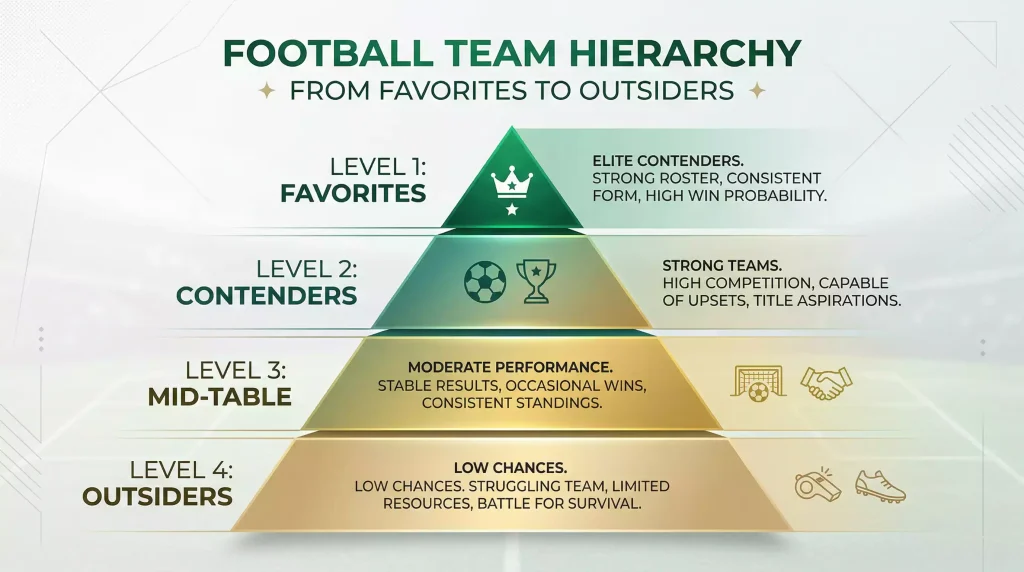
The tiers I use are Favourites, Contenders, Dark Horses, and Make-Up-The-Numbers. The labels are blunt, but clarity matters more than diplomacy when money is on the line. Within each tier, I provide context on squad quality, qualifying form, group placement, and betting odds. The forty-eight profiles that follow should serve as your reference throughout the tournament.
Favourites — The Title Contenders
Sitting in a Dublin pub during the 2022 final, watching Argentina and France trade goals in what became one of the greatest matches ever played, I remember thinking that these two nations occupy a different plane. Not because of romance or history — though both have plenty — but because their squads possess the depth, the cohesion, and the mentality to win seven consecutive knockout matches against elite opposition. That is what lifting the World Cup requires: seven games without a fatal error. Very few teams can do it.
For 2026, I count six genuine title contenders: Brazil, Argentina, France, England, Germany, and Spain. Each has flaws. Each could exit earlier than expected. But each carries the combination of individual talent and collective organisation that tournament victories demand.
Brazil enter as the betting market’s joint-favourites at 9/2 alongside Argentina. The Seleção have not lifted the trophy since 2002 — a drought that feels longer given Brazil’s cultural identification with the tournament — but the current squad may be their strongest in a generation. Vinícius Júnior operates at peak powers after consecutive Champions League triumphs with Real Madrid. Rodrygo, Raphinha, and Endrick provide depth across the front line that no other nation can match. The midfield, anchored by Casemiro and Bruno Guimarães, balances experience with energy. Defensively, Marquinhos and Militão form a centre-back pairing capable of shutting down any opponent. Group C pairs them with Morocco, Scotland, and Haiti — a path to the knockouts that should not require full exertion. Brazil’s ceiling is a sixth World Cup title; their floor is a quarter-final exit to a European heavyweight. The latter would devastate Brazilian football, but the odds price that range appropriately.
Argentina at 5/1 defend the crown. Lionel Messi turns thirty-nine during the tournament, and his participation remains the variable that swings their odds. If Messi plays a full role — starting matches, dictating tempo, delivering in decisive moments — Argentina become the sentimental favourite for neutral observers worldwide. If he is limited to substitute appearances or absent entirely, the squad must prove it has grown beyond reliance on its talisman. Julián Álvarez has emerged as a world-class forward in his own right; Enzo Fernández anchors the midfield; Cristian Romero marshals the defence. Group J (Algeria, Austria, Jordan) offers no resistance, meaning Argentina could coast into the knockouts with minimal exertion. The challenge is that several key players from Qatar 2022 — Di María, Otamendi — are a tournament cycle older. Argentina remain dangerous, but 5/1 may not offer sufficient value given the uncertainty surrounding Messi.
France at 6/1 are perpetually underrated by casual observers and appropriately feared by sharp bettors. Kylian Mbappé is the most dangerous player on the planet, capable of deciding matches in moments. The midfield has regenerated around Tchouaméni, Camavinga, and Koné — a mix of steel, silk, and dynamism that rivals any in Europe. Didier Deschamps, if he remains in charge, knows tournament football better than any active coach: World Cup winner as player and manager, finalist at the last edition. Group I (Norway, Senegal, Iraq) presents no serious obstacle. France’s risk is complacency; success breeds expectation, and expectation can burden young shoulders. But 6/1 fairly prices a squad capable of winning any seven-match sequence.
England at 7/1 represent the clearest value among the favourites. Three consecutive major tournament semi-finals — World Cup 2018, Euro 2020 (final), Euro 2024 (final) — have established England as perennial contenders. The squad depth is extraordinary: Bellingham, Saka, Foden, Palmer, Rice, Alexander-Arnold, Walker, Stones. No other nation can rotate at England’s level without significant quality drop-off. Group L (Croatia, Ghana, Serbia) is manageable; Croatia pose the only real threat, and even they have aged since their 2018 final appearance. England’s knockout path depends on bracket position, but the expanded format offers favourable routes for group winners. At 7/1, England’s consistent tournament performance is undervalued by a market that remembers 1966 and little else.
Germany at 10/1 have rebuilt. The group-stage exits in 2018 and 2022 were humiliating, but Euro 2024 on home soil restored belief. Julian Nagelsmann’s pressing system suits the personnel, and Jamal Musiala has matured into a player who can decide knockout matches. Florian Wirtz, Kai Havertz, and Leroy Sané provide attacking options; Joshua Kimmich orchestrates from midfield; Antonio Rüdiger anchors defence. Group E (Côte d’Ivoire, Ecuador, Curaçao) should yield nine points and a comfortable path to the round of thirty-two. Germany historically peak at World Cups; they have won four titles and reached at least the semi-finals at eleven of the last fifteen editions. At 10/1, the market underestimates their tournament DNA.
Spain at 10/1 field the youngest squad among the favourites. Pedri, Gavi, and Lamine Yamal form a midfield-to-attack axis that will dominate international football for the next decade. The risk is that youth brings volatility; Spain exited the 2022 World Cup on penalties to Morocco after controlling possession without clinical finishing. Group H (Saudi Arabia, Cape Verde, Uruguay) includes Uruguay as a genuine challenger for top spot, so Spain may need to peak earlier than some rivals. At 10/1, the price reflects both upside and uncertainty — a fair band for a side whose ceiling is high but whose knockout composure remains unproven.
Contenders — Realistic Quarter-Final Threats
The gap between favourites and contenders is smaller than casual observers assume. A contender reaching a semi-final or final would surprise no one; reaching the same stage via an upset or two would make headlines but not rewrite history. These are sides capable of beating favourites on a given day but lacking the consistency or depth to be considered frontrunners. The value in this tier often lies with sides priced longer than their quality deserves — bookmakers cluster contenders together, creating opportunities for sharp punters.
Portugal at 14/1 navigate the post-Ronaldo transition. Cristiano Ronaldo, at forty-one, may feature as a super-sub or symbolic presence, but the attacking burden falls to Rafael Leão, João Félix, and Gonçalo Ramos. The midfield (Bruno Fernandes, Vitinha, Rúben Neves) is among Europe’s finest; Bernardo Silva provides creativity and pressing intensity. The defence remains solid with Rúben Dias anchoring the back line. Portugal’s challenge is that their path to qualification — topping Ireland’s group — created expectation that the squad has not fulfilled at recent tournaments. Group K (Colombia, Uzbekistan, DR Congo) is competitive but manageable. Portugal should reach the quarter-finals; whether they progress further depends on who they draw and whether the attack clicks at the right moment.
The Netherlands at 16/1 are solid without being spectacular. Virgil van Dijk commands the defence with the authority that comes from years at the highest level; Frenkie de Jong orchestrates midfield when fit; Cody Gakpo provides goal threat and creativity from wide positions. The absence of a truly elite finisher — Memphis Depay carries burden but lacks consistency — caps their ceiling. Group F (Japan, Tunisia, Sweden) is balanced; the Netherlands are favourites but not overwhelmingly so. Japan pose a genuine threat, as demonstrated at the 2022 World Cup. Three World Cup finals without a win haunts Dutch football; whether this squad can exorcise that ghost is doubtful, but stranger things have happened in tournament football.
Belgium at 20/1 carry the baggage of a golden generation that never delivered. Kevin De Bruyne remains world-class, capable of deciding matches with a single pass or strike. But the supporting cast — Lukaku, Hazard-era remnants — has faded. The squad refresh has been incomplete; Roberto Martínez’s departure has not sparked tactical reinvention under new management. Group G (Iran, New Zealand, Egypt) is gentle, so Belgium should progress comfortably. Beyond the group stage, their pedigree invites scepticism. At 20/1, I see Belgium as slightly long value, but the lack of recent tournament success justifies caution.
Croatia at 28/1 have reached two of the last three World Cup finals and finished third in Qatar 2022. That pedigree demands respect. Luka Modrić, at thirty-nine, remains influential in short bursts; his ability to control tempo and deliver key passes in decisive moments has defined Croatia’s tournament runs. Joško Gvardiol anchors a youthful defence that has matured rapidly; Mateo Kovačić and Marcelo Brozović control tempo in central areas. The concern is regeneration: the midfield that powered Croatia’s runs is ageing, and no tournament-proven replacements have emerged. Group L pairs them with England — a statement match early. If Croatia beat England, their odds shorten dramatically; if they lose, the narrative becomes “golden generation sunset.”
Uruguay at 33/1 should not be dismissed. Darwin Núñez and Federico Valverde form a spine of Liverpool and Real Madrid quality — elite players at the peak of their powers. Marcelo Bielsa’s tactical nous has refreshed a side that underperformed in Qatar 2022, instilling the pressing intensity and positional discipline that define his teams. Ronald Araújo provides defensive steel, and the midfield runs deeper than casual observers realise. Group H includes Spain, but Uruguay finishing second and navigating to the quarter-finals is realistic. La Celeste have tournament pedigree — two World Cup titles, a habit of exceeding expectations — and Bielsa’s presence elevates their ceiling. At 33/1, you are paid for variance on a squad that punches above market perception.
Colombia at 40/1 carry James Rodríguez, whose tournament form defies club-level inconsistency. At the 2014 World Cup, James finished as Golden Boot winner; at Copa América 2024, he led the tournament in assists. Luis Díaz provides Premier League intensity; the midfield runs deep with Barrios, Ríos, and Lerma. Group K (Portugal, Uzbekistan, DR Congo) offers a path: beating Portugal would require a peak performance, but second place and a favourable knockout draw could see Colombia reach the quarter-finals. At 40/1, I rate them as value among the contenders — a squad with the individuals to upset bigger names.
Dark Horses — Value at Longer Odds
Dark horses are sides priced between 50/1 and 100/1 that possess the quality to upset favourites on a given day and the pathway to reach at least the quarter-finals under favourable circumstances. Backing a dark horse is speculative, but the expanded format — with thirty-two teams in the knockout bracket — increases the probability of surprise runs. History supports this view: South Korea reached the 2002 semi-finals as hosts at 150/1 pre-tournament; Croatia were 40/1 outsiders before their 2018 final run.
Morocco at 50/1 were semi-finalists in 2022, defeating Spain and Portugal en route. That experience matters. The squad has retained core players — Hakimi, Amrabat, Ziyech, En-Nesyri — and added depth from European leagues. Walid Regragui’s tactical flexibility allows Morocco to sit deep against superior sides and counter with devastating pace. Group C (Brazil, Scotland, Haiti) is brutal; Brazil will likely take top spot. But Morocco finishing second or as a strong third is realistic. A pathway through the bracket that avoids Brazil or Argentina until the semi-finals could see Morocco repeat their Qatar heroics. At 50/1, you are backing a side that has proven it can beat elite opposition in knockout football. I rate Morocco as the standout dark horse of the tournament.
Japan at 66/1 have upset Germany and Spain in group stages at the last two World Cups. Their pressing intensity and tactical discipline make them uncomfortable opponents for possession-based sides. Hajime Moriyasu has built a squad that thrives on chaos, with Takefusa Kubo, Kaoru Mitoma, and Junya Ito providing pace and trickery in transition. Group F (Netherlands, Tunisia, Sweden) is competitive; Japan could realistically finish second and progress. The ceiling is a quarter-final appearance; the floor is a group-stage exit if results go against them. At 66/1, the variance is acceptable for punters seeking outsider exposure.
Senegal at 80/1 are Africa Cup of Nations holders and boast Premier League quality across the squad: Édouard Mendy, Kalidou Koulibaly, Ismaïla Sarr, and the emerging Habib Diallo. The loss of Sadio Mané to retirement has been absorbed; the squad remains collectively strong. Group I (Norway, France, Iraq) is difficult — France are clear favourites — but second place is achievable. Senegal’s ceiling depends on knockout draw; if they avoid top seeds early, a quarter-final is plausible. At 80/1, the price offers value for African football enthusiasts.
Norway at 100/1 carry Erling Haaland, one of the deadliest finishers in world football. Haaland’s presence alone justifies a speculative punt at triple figures. Group I features France, Senegal, and Iraq. A second-place finish behind France is possible; so is a run to the quarter-finals if the bracket falls kindly. Norway have not qualified for a major tournament since Euro 2000, so this appearance carries emotional weight. Martin Ødegaard provides creativity from midfield, and the defensive spine has improved through qualifying. The squad beyond Haaland is modest, but tournaments are often decided by individual brilliance. At 100/1, you are betting on Haaland carrying his nation deeper than expected.
USA at 33/1 merit mention despite sitting on the cusp of contenders. Host nation advantage is historically significant — the last three hosts have reached at least the semi-finals — and crowd support across eleven American venues will create atmospheres unlike anything most opponents have experienced. Christian Pulisic leads an attack that includes Weston McKennie, Gio Reyna, and Folarin Balogun. The squad is young; the ceiling is undefined. Group D (Paraguay, Australia, Turkey) is favourable. If the USA top their group and avoid favourites until the quarter-finals, a semi-final run is achievable. At 33/1, the market may be underweighting home advantage that has proved decisive at previous tournaments.
Scotland and England — The Irish Connection
Ireland did not qualify. That sentence stings more than it should, given the penalty shootout loss to Czechia that ended the Boys in Green’s campaign. Matt Doherty’s saved penalty in Prague will haunt Irish football for years; the margins were that fine. But the absence of Ireland from the tournament does not mean Irish punters lack emotional investment. Two nations command attention: Scotland, our Celtic cousins, and England, whose Premier League fills Irish screens every weekend.
Scotland return to the World Cup for the first time since 1998. An entire generation of Scottish football fans has never seen their nation on this stage. The qualification campaign was a triumph of collective spirit — Steve Clarke building a squad that exceeded the sum of its parts. Andy Robertson provides Premier League quality at left-back; John McGinn offers energy and goals from midfield; Kieran Tierney anchors the defence when fit. The squad lacks a world-class finisher — Che Adams and Lyndon Dykes are capable but not prolific — which caps their ceiling.
Group C — Brazil, Morocco, Haiti — is brutal, but Scotland have a path. Beat Haiti convincingly, compete against Morocco, and limit damage against Brazil. Finishing third with four points could be enough to progress as one of the best third-placed teams, depending on results elsewhere. At 150/1 for outright victory, Scotland are not contenders, but backing them to qualify from the group at 5/2 offers reasonable value. The match against Haiti is their World Cup final; win that, and possibilities open. For Irish punters, supporting Scotland is an act of Celtic solidarity; watching Robertson and McGinn represent a nation that shares our footballing frustrations — the near misses, the playoff heartbreaks — feels natural.
England are different. The historical rivalry, the lingering resentment, the complex relationship forged by geography and emigration — these complicate Irish emotions toward the Three Lions. The sporting relationship is fraught: 800 years of history cannot be erased by football, no matter how much we pretend otherwise. Yet most Irish football fans follow the Premier League, support English clubs, and know English players better than any others. The Premier League is Ireland’s domestic league by proxy; we live and breathe its narratives.
Watching Declan Rice, born in London to Irish parents and once capped by Ireland at youth level, represent England in a World Cup is bittersweet but inescapable. Rice chose England over Ireland in 2019; that decision still stings for some, though his career trajectory has vindicated the choice professionally. He anchors England’s midfield alongside Jude Bellingham — a partnership that could dominate international football for a decade.
England at 7/1 offer value; their squad depth is extraordinary; their tournament pedigree under recent management is strong. Three consecutive semi-finals at major tournaments represent sustained excellence, not luck. If you separate sporting analysis from historical baggage, England merit consideration. Group L (Croatia, Ghana, Serbia) is manageable. A semi-final or final appearance would not surprise. Whether Irish punters can bring themselves to back England is a personal question; from a pure betting perspective, the value exists.
Host Nations — USA, Mexico, and Canada
Three nations share hosting duties, and all three have qualified automatically. Home advantage matters in football — familiar conditions, travel minimisation, crowd support — but it manifests differently across a continent-spanning tournament.
USA benefit most. Eleven of the sixteen venues are in the United States, including both semi-finals and the final at MetLife Stadium in New Jersey. If the bracket aligns, the USA could play every knockout match on home soil before a home crowd. That advantage is worth half a goal per match, by some estimates, and it tilts the odds. At 33/1, the USA are shorter than their squad quality alone would justify, but host nation history supports the price.
Mexico host the opening match at Estadio Azteca but play only two group games on home soil before the tournament shifts north. The altitude advantage in Mexico City — 2,200 metres above sea level — will affect opponents unaccustomed to thin air, but Mexico’s knockout matches will likely be in the USA, where that advantage disappears. At 80/1, Mexico are priced as outsiders despite their passionate fan base and CONCACAF pedigree. Group A (South Korea, South Africa, Czechia) is winnable, but the squad lacks the individual quality of previous Mexican generations.
Canada host two group-stage matches in Vancouver and Toronto but no knockout fixtures. Their advantage is marginal. At 150/1, Canada are priced as make-up-the-numbers, which reflects squad limitations. Alphonso Davies is world-class; the rest of the roster is MLS or lower-tier European. Group B (Switzerland, Qatar, Bosnia-Herzegovina) is competitive, and Canada finishing second or third is achievable. A round-of-thirty-two appearance would be considered a success.
Debutants and Returning Nations
The expanded forty-eight-team format brings nations that have rarely — or never — graced the World Cup stage. Their stories add colour to the tournament, even if their odds suggest early exits.
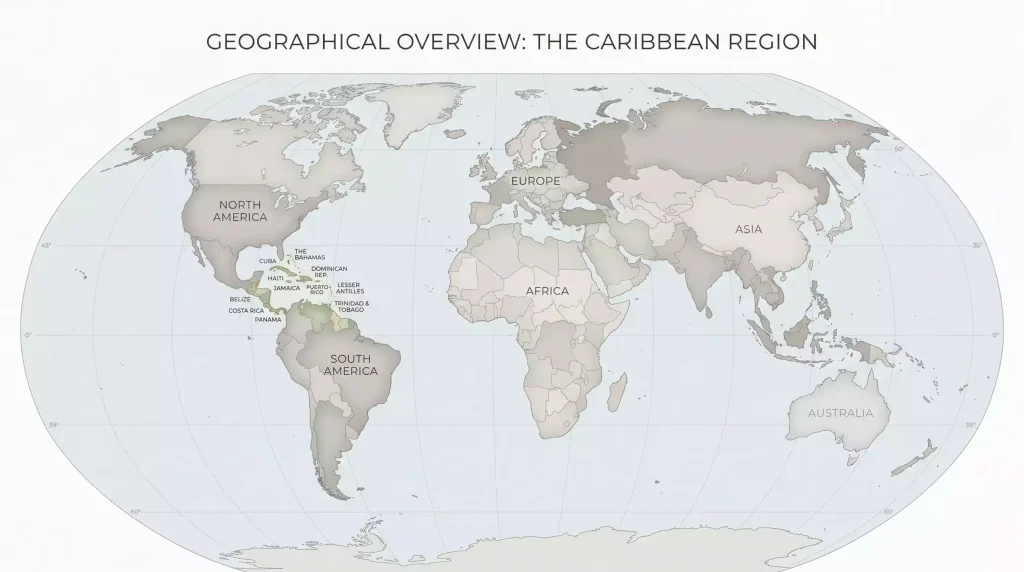
Haiti make their first World Cup appearance since 1974. That fifty-two-year gap speaks to the struggles of Caribbean football development. Group C (Brazil, Morocco, Scotland) is unkind, but Haiti’s match against Scotland is their Super Bowl — a chance to secure a historic result against a beatable opponent. At 500/1 for outright victory, Haiti are lottery tickets, but backing them to beat Scotland in a one-off match offers a more realistic flutter.
Curaçao debut at the World Cup, becoming the smallest nation by population (170,000) ever to qualify. Group E (Germany, Côte d’Ivoire, Ecuador) guarantees difficult matches, but Curaçao’s qualification alone represents a triumph. At 1000/1, backing them is pure romance.
Iraq return to the World Cup for the first time since 1986. Group I (Norway, Senegal, France) is challenging, but Iraqi football has rebuilt through diaspora talent and domestic stability. A single group-stage point would be celebrated as a victory.
Cape Verde make their debut in Group H (Spain, Saudi Arabia, Uruguay). The Atlantic island nation of 600,000 people has produced remarkable athletes relative to its population, but competing against Spain and Uruguay is a step beyond current capacity. One point — a draw against Saudi Arabia — is a realistic ceiling.
Full Team Directory by Group
For quick reference, below is every team organised by group, with their current outright odds and my single-word tier classification.
| Group | Team | Odds | Tier |
|---|---|---|---|
| A | Mexico | 80/1 | Outsider |
| A | South Korea | 100/1 | Outsider |
| A | South Africa | 250/1 | Outsider |
| A | Czechia | 200/1 | Outsider |
| B | Canada | 150/1 | Outsider |
| B | Switzerland | 80/1 | Outsider |
| B | Qatar | 300/1 | Outsider |
| B | Bosnia-Herzegovina | 250/1 | Outsider |
| C | Brazil | 9/2 | Favourite |
| C | Morocco | 50/1 | Dark Horse |
| C | Scotland | 150/1 | Outsider |
| C | Haiti | 500/1 | Outsider |
| D | USA | 33/1 | Contender |
| D | Paraguay | 200/1 | Outsider |
| D | Australia | 200/1 | Outsider |
| D | Turkey | 100/1 | Outsider |
| E | Germany | 10/1 | Favourite |
| E | Côte d’Ivoire | 100/1 | Outsider |
| E | Ecuador | 100/1 | Outsider |
| E | Curaçao | 1000/1 | Outsider |
| F | Netherlands | 16/1 | Contender |
| F | Japan | 66/1 | Dark Horse |
| F | Tunisia | 250/1 | Outsider |
| F | Sweden | 150/1 | Outsider |
| G | Belgium | 20/1 | Contender |
| G | Iran | 300/1 | Outsider |
| G | New Zealand | 500/1 | Outsider |
| G | Egypt | 150/1 | Outsider |
| H | Spain | 10/1 | Favourite |
| H | Saudi Arabia | 300/1 | Outsider |
| H | Cape Verde | 1000/1 | Outsider |
| H | Uruguay | 33/1 | Contender |
| I | Norway | 100/1 | Dark Horse |
| I | Senegal | 80/1 | Dark Horse |
| I | France | 6/1 | Favourite |
| I | Iraq | 500/1 | Outsider |
| J | Argentina | 5/1 | Favourite |
| J | Algeria | 200/1 | Outsider |
| J | Austria | 150/1 | Outsider |
| J | Jordan | 500/1 | Outsider |
| K | Colombia | 40/1 | Contender |
| K | Uzbekistan | 500/1 | Outsider |
| K | Portugal | 14/1 | Contender |
| K | DR Congo | 500/1 | Outsider |
| L | England | 7/1 | Favourite |
| L | Croatia | 28/1 | Contender |
| L | Ghana | 200/1 | Outsider |
| L | Serbia | 150/1 | Outsider |
This directory provides a snapshot for quick navigation. For deeper analysis on individual nations, explore the dedicated team profiles linked throughout this site. The odds listed reflect current market positioning and will shift as the tournament approaches.
FAQ
Forty-eight teams offer forty-eight stories. Some will end in glory, most in disappointment. For Irish punters watching as neutral observers, the opportunity lies in detachment — analysing without emotion, backing value without tribalism. The favourites will deliver drama; the dark horses will provide upsets; the debutants will cherish every moment. Navigate this group-by-group breakdown to understand how these forty-eight nations slot into the bracket, and position your bets before the first whistle at Estadio Azteca.
